Customer service

YouTube
Replacing oil seals in a Tomos | Guide & tips
Looking for a step-by-step guide to replace the oil seals in your Tomos engine? In this guide, we explain what an oil seal is exactly, how it works, and how to prevent damage with the right tools. This way you maintain optimal engine performance and avoid unnecessary costs.
What is an oil seal?
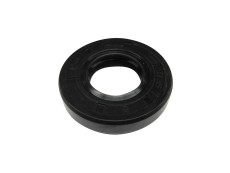
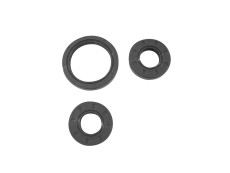
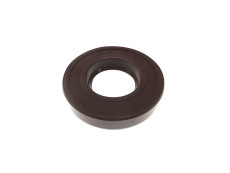
An oil seal is a sealing ring that prevents leaks and keeps dirt out. In a Tomos engine, the oil seal ensures that ATF oil and fuel mixture stay in the right place, while unwanted air and dirt cannot enter. Moreover, an oil seal maintains the correct crankcase pressure, so that the mixture of oil and fuel is drawn in optimally.
Although an oil seal is similar to a gasket, it differs in that it is specifically designed for rotating shafts, for example the crankshaft. This keeps the engine running smoothly for a long time without oil leaks or reduced performance.
How does an oil seal work?
An oil seal contains a flexible rubber lip and a spring on the inside. The spring keeps the oil seal pressed tightly against the shaft, so the lip forms a seal. This prevents liquids, dirt, or air from entering.
At the crankshaft, the oil seal also ensures the correct crankcase pressure, so that only the desired mixture of oil and fuel flows upward. Without a properly functioning oil seal, the engine can run irregularly or even sustain damage due to uncontrolled oil loss or dirt in the engine.
How can I tell if my oil seal is damaged?
You can recognize a damaged oil seal by the following signs:
- Thick white smoke from the exhaust: The oil burns along with the fuel mixture. This produces thick white smoke.
- Air/vacuum leak: There is also an oil seal behind the ignition. If it leaks, your engine draws air from there which makes your engine run lean.
- ATF oil on the front sprocket and rear wheel: With a leaking drive shaft oil seal, oil leaks onto your front sprocket. This splashes dirt onto your chain and rear wheel.
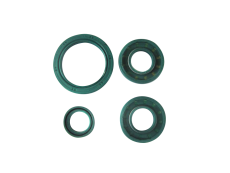
Do you recognize one or more of these symptoms? Then it's time to proceed with replacement quickly. View our selection of oil seals and replace in time to prevent engine damage.
What do damaged oil seals do to the engine?
A defective oil seal can lead to:
- Oil loss: The engine is insufficiently lubricated and overheats.
- Accelerated wear: Moving parts wear out faster due to lack of lubrication.
- Incoming dirt and water: Dirt and water can enter the engine, causing rust and wear.
- Poor engine performance: Vibrations, unusual noises, and an irregular running engine result from this.
Replace a worn-out oil seal in time to avoid expensive repairs or a complete engine overhaul. At Tomoshop.nl, you will find high-quality oil seals for every Tomos engine.
Removing and replacing oil seals
How do you remove an oil seal?
-
Preparing the workspace
- Make sure the area around the oil seal is thoroughly cleaned.
- Use brake cleaner or a clean cloth to remove all contaminants.
-
Loosening the old oil seal
- Use a flat screwdriver or a drill bit.
- Carefully insert the screwdriver under the edge of the oil seal.
- Pry gently until the oil seal comes loose. Be careful not to damage the shaft or housing.
- Are you using a drill bit? Then drill carefully into the oil seal and make sure you do not go too deep to avoid damaging other components behind the seal.
- Use the drill bit to gently remove the oil seal.
How do you install a new oil seal?
-
Check the new oil seal
- Compare the dimensions with the old oil seal and check if the spring is intact.
- Ensure that both the surface where the oil seal will sit and the oil seal itself are completely clean. Clean both with brake cleaner.
- Apply a thin layer of oil or grease to the inside of the oil seal and on the shaft to help with installation.
-
Positioning the oil seal
- Gently press the oil seal by hand into the correct position. Check the orientation (inside and outside).
- Use a suitable socket or a piece of wood that matches the outer diameter of the oil seal.
- Tap the oil seal gently and evenly inward all around with a hammer. Ensure that the oil seal sits flush and centered, without tilting.
- Avoid tapping the oil seal too deep or against a bearing; this can cause premature wear.
Final checks and reassembly
Final checks after replacing the oil seal
-
Visual inspection
- Check whether the oil seal is installed evenly and flush in the housing without play or tilt.
-
Manual test
- Rotate the engine (or crankshaft) by hand a few times to feel if everything moves smoothly without resistance or abnormal noises.
-
Start the engine
- Start the engine and look out for any leaks, noises, or vibrations. If everything is fine, the engine will run smoothly without problems.