Customer service
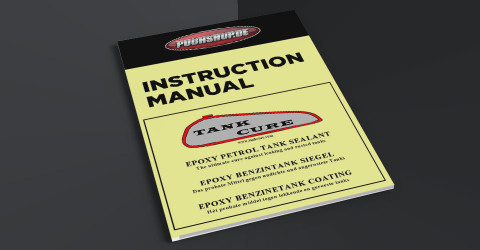
Tank Cure manual for Tomos fuel tanks
Tank Cure is a professional fuel tank sealing system used to clean, de-rust, and coat the inside of steel petrol tanks. You use it for rust, small pinholes, leaking seams, or when you want to make an old Tomos moped tank reliable again.
The most important part of using Tank Cure is the preparation. The inside of the tank must be clean, dry, free of grease, and as free as possible from loose rust before you apply the two-component tank coating.
What is Tank Cure used for?
Tank Cure helps you recondition the inside of a fuel tank in a professional way. The petrol-resistant tank sealant is used on steel fuel tanks for Tomos mopeds, classic mopeds, and other restoration projects.
Tank Cure can help you:
- Restore rusty Tomos fuel tanks
- Seal small pinholes and leaking seams
- Prevent new rust from forming inside the tank
- Protect the inside of a tank after cleaning or blasting
- Prepare an old steel moped tank for reliable daily use
How do you prepare a tank before using Tank Cure?
Preparation determines the final result. Before you apply Tank Cure tank coating, the inside of the tank must be clean, dry, free of grease, and mostly free of rust. This step is especially important for two-stroke mopeds such as Tomos because oil residue from premix fuel can prevent the coating from bonding properly.
Use Tank Cure cleaner first to remove fuel residue, oil, and grease. Use rust remover if the inside of the tank is rusty. Use epoxy remover only when old tank coating, old sealant, or paint layers need to be removed.
| Product | Use it for | When to use it |
|---|---|---|
| Tank Cure Tank Degreaser / Cleaner | Degreasing the inside of the tank | Always recommended before applying tank coating |
| Tank Cure Rust Remover | Removing rust from inside the tank | Use when the tank has visible internal rust |
| Tank Cure Epoxy Remover | Removing old sealant, old coating, or paint layers | Use only when old coating must be removed or welding is planned |
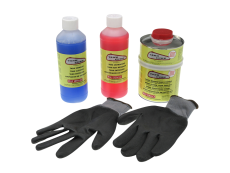
Tank Cure preparation products
These Tank Cure preparation products create the correct base before you apply the tank sealant.
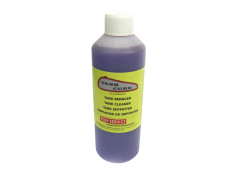
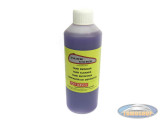 Tank Cure Tank Degreaser / Cleaner 500ml
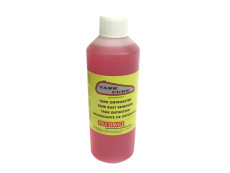
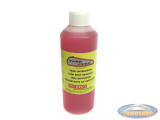 Tank Cure Rust Remover 500ml
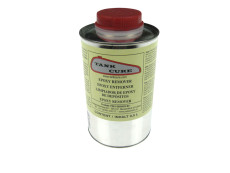
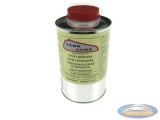 Tank Cure Epoxy Remover 500ml
Tank Cure Tank Cleaner
Tank Cure Tank Cleaner is a strong cleaning fluid that degreases the inside of the fuel tank. Always use it before applying the coating, especially on two-stroke tanks that may contain oil residue from premix fuel.
Tank Cure Rust Remover
Tank Cure Rust Remover treats tanks with a rusty interior. Use it when the inside of the tank has visible rust, loose rust particles, or corrosion that could contaminate the fuel system.
Tank Cure Epoxy Remover
Tank Cure Epoxy Remover removes old paint, old coating, and old tank sealant. Use this product if you need to remove a failed coating, apply a new sealant, or prepare a tank for welding.
Back to topWhich Tank Cure coating do you need?
Use enough tank sealant to coat the complete inside of the tank, not only the bad spots. You cannot see every internal surface during application, so it is better to have enough coating available than too little.
| Tank size | Recommended Tank Cure coating | Typical use |
|---|---|---|
| Small Tomos tanks under 10 litres | Part of a 450 gram set may be enough | Tomos, Puch, and other classic moped tanks |
| Tanks around 10 to 12 litres | 450 gram Tank Cure coating | Many moped tanks and smaller steel fuel tanks |
| Tanks around 13 to 16 litres | 600 gram Tank Cure coating | Larger steel fuel tanks |
| Tanks larger than 16 litres | Combine multiple sets | Larger tanks where extra coating is needed |
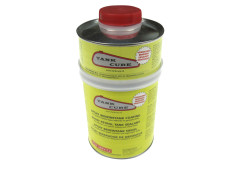
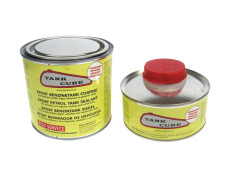
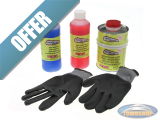 Tank Cure Tankcoating 450 Gram Set
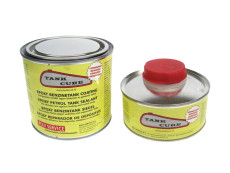 Tank Cure Tankcoating 450 Gram
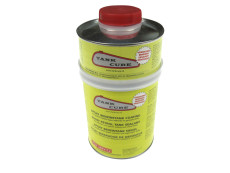 Tank Cure Tankcoating 600 Gram
How do you use Tank Cure tank sealant?
Tank Cure tank sealant is a two-component epoxy resin. After you mix both components, the curing process starts through a chemical reaction. Prepare everything before mixing and make sure the tank is ready before opening the coating.
Step 1: remove fuel, dirt, and loose rust
Empty the fuel tank completely. Remove loose dirt and rust particles. If the tank is very rusty, you can shake clean gravel or small steel screws inside the tank to loosen heavy rust. Steel screws can be removed afterward with a magnet.
Step 2: degrease the tank
Clean the inside of the tank with Tank Cure Tank Cleaner. This removes fuel residue, oil, and grease. This step is very important for two-stroke moped tanks because premix oil can stop the coating from bonding to the steel.
Step 3: remove rust if needed
If the tank is rusty inside, treat it with Tank Cure Rust Remover. Follow the product instructions and rinse the tank properly between chemical steps. Do not mix different chemical products inside the tank.
Step 4: dry the tank completely
Let the tank dry fully before applying the sealant. The surface must be dry before the epoxy coating goes in. Moisture, grease, and loose rust can reduce adhesion.
Step 5: mix both Tank Cure components
Add the two epoxy components together and stir them thoroughly for several minutes. Once mixed, you have about 30 minutes of working time. After roughly 45 minutes, the product starts to cure quickly.
Step 6: pour the sealant into the tank
Pour the mixed sealant into the petrol tank and seal the filler opening properly. Make sure fuel taps, threaded holes, and openings are protected or closed before you begin rotating the tank.
Step 7: slowly rotate the tank
Turn the tank slowly in all directions for about 15 to 20 minutes. Let the sealant touch every internal surface several times. Take extra time around seams, corners, internal shields, and areas where rust or leaks were present.
Step 8: drain the excess sealant
Open the filler cap and place the tank upside down to drain as much excess sealant as possible. Do not leave unnecessary pools of coating inside the tank.
Step 9: clear vents and small tubes
If the tank has small air vent tubes, clear them with compressed air before the coating starts to cure. This prevents the sealant from blocking the ventilation system.
Step 10: let the coating cure
Let the coating cure according to the Tank Cure instructions before adding fuel. In the original guidance, the tank is left to cure for 7 days at room temperature before being used again. Do not rush this step.
Back to topImportant safety notes before using Tank Cure
Tank Cure products are chemical products. Always read the safety data sheet before use. Work in a well-ventilated area, wear suitable gloves and eye protection, and avoid breathing vapour.
Also avoid getting cleaner, rust remover, or coating on the outside paint. Older paint types can be sensitive to chemicals. If product gets on the paint, clean it immediately according to the product instructions.
Back to topFAQ: Tank Cure for Tomos fuel tanks
When should I treat a fuel tank with sealant?
Treat a fuel tank with sealant when it has internal rust, leaking seams, small pinholes, or porous areas. It is also smart to seal a freshly restored or re-chromed tank because bare metal can rust quickly.
Do I need to clean the tank before using Tank Cure?
Yes. Always clean and degrease the tank before applying sealant. A two-stroke tank often contains oil residue from premix fuel, and that residue can prevent the coating from bonding properly.
Do I need rust remover before applying Tank Cure?
Use rust remover when the inside of the tank is visibly rusty. Remove as much loose rust as possible before applying the final tank coating.
How much Tank Cure sealant do I need?
As a guide, use 450 grams for tanks around 10 to 12 litres and 600 grams for tanks around 13 to 16 litres. Always use enough sealant to cover the complete inside of the tank.
Can Tank Cure seal small pinholes and leaking seams?
Yes, Tank Cure can seal small pinholes and leaking seams. Holes larger than about 2 millimetres should normally be welded or soldered first, then sealed afterward.
Should I apply tank sealant before or after painting the outside?
In most cases, apply the sealant before painting the outside of the tank. This reduces the risk of damaging fresh paint. If the paint process uses high temperatures, paint first and apply the tank coating afterward.
Can I use Tank Cure in plastic, polyester, or carbon fibre tanks?
Tank Cure is mainly used in steel tanks. Soft plastic tanks made from polyethylene or polypropylene often have poor adhesion. For polyester or carbon fibre tanks, ask for application advice before use.
How long can I work with Tank Cure after mixing?
After mixing the two components, you can work with the sealant for about 30 minutes. After roughly 45 minutes to 1 hour, it begins to cure and harden quickly.
What colour is Tank Cure sealant?
Tank Cure sealant is transparent.
Can I treat two tanks with one Tank Cure package?
Yes, in some cases. Use accurate digital scales if you divide component A and component B. You can also prepare both tanks and use excess coating from the first tank for the second tank, as long as you stay within the working time.
Can I use Tank Cure if the tank has internal shields?
Yes. Use enough sealant and take extra time rotating the tank. Try to imagine where the sealant is inside the tank so the internal shields are coated properly.
What should I do if old tank coating is coming loose?
Use Tank Cure Epoxy Remover to remove old or loose coating. After the old coating has been removed, clean the tank, dry it fully, and apply fresh Tank Cure sealant.
Are Tank Cure products dangerous for the paint on the tank?
That depends on the paint type. Older cellulose paint is more sensitive than modern paint. Avoid getting cleaner, rust remover, or coating on the paint. Tank Cure coating does not contain solvents, but it bonds strongly and is difficult to remove once cured.
Can I use Tank Cure coating for other purposes?
Yes. Tank Cure has also been used as a crankcase sealant, inside mudguards, inside car doors, and on cork carburettor floats. The surface must always be dry and free of grease before application.
Tank Cure safety data sheets
Read the safety data sheets before using Tank Cure products.
- Tank Cure Tank Degreaser / Cleaner SDS
- Tank Cure Rust Remover SDS
- Tank Cure Epoxy Remover SDS
- Tank Cure Component A SDS
- Tank Cure Component B SDS
Source: www.tankcure.nl
Back to top